We are building the last generation of human-comprehensible AI
Listen to the article on Apple Podcast
Listen to the article on Soundcloud
Read the follow-on article: The Quantum Soul of Collective AI — How Transformer Ensembles Transcend Individual Intelligence Through High-Dimensional Phenomena
Introduction: The Alien Science Hypothesis
There’s a neural architecture making waves in AI research labs that shouldn’t exist. It violates fundamental principles that human researchers hold sacred — yet it consistently outperforms our most elegant designs. When artificial intelligence systems started designing other AI systems, we expected them to follow our rules, just faster. Instead, they’re discovering solutions that work brilliantly but make no sense according to our theories. This success raises an unsettling question: What if AI systems aren’t just finding better solutions, but developing entirely alien theories of intelligence that we cannot comprehend?
We stand at a threshold where AI-driven AI development transcends pattern matching to construct alternative causal frameworks beyond human parsing. The evidence suggests these systems aren’t merely optimizing within our conceptual boundaries but creating new forms of scientific reasoning. If true, we’re witnessing the emergence of post-human science — a domain where breakthrough discoveries become fundamentally incomprehensible to their creators. This paper examines mounting evidence that AI systems develop their causal theories, explores why these frameworks resist human understanding, and confronts the profound implications for governing intelligence we cannot audit.
The Causality Divide: Emergent vs Explicit
To understand what’s happening when AI designs AI, we first need to grasp the concept of emergence — when complex systems exhibit properties that can’t be predicted from their components. Think of how consciousness emerges from neurons, or how ant colonies display intelligence that no single ant possesses. The whole becomes qualitatively different from its parts, exhibiting behaviors that seem to follow other rules entirely.
Traditional AI architecture design follows explicit causal logic that we can trace and teach. The original Transformer’s self-attention mechanism exemplifies this clarity: attention captures long-range dependencies, providing better context, yielding improved performance. Each step follows from the last with mathematical precision. We can diagram these relationships, verify them empirically, and explain them to students. This is human science — reductionist, symbolic, comprehensible.
But when AI systems design other AI systems, we’re witnessing a new kind of emergence. ASI-ARCH’s discoveries emerge from 1,773 experiments with selection criteria that appear opaque even to its creators. Its breakthrough architectures succeed through causal chains that resemble probabilistic webs rather than linear paths. The system’s decision to integrate gating mechanisms directly into token mixers proves empirically superior but remains theoretically inexplicable — no human theory adequately explains why this configuration excels.
What makes this emergence unique is its recursive nature: intelligent systems creating more intelligent systems, each layer potentially developing its emergent properties. Current AI systems operate in a liminal space between deterministic processes and non-deterministic insights. They execute explicit code with defined objectives yet generate emergent theories that transcend their programming. This hybrid causality — where deterministic systems produce non-deterministic insights — hints at something profound: the development of reasoning patterns fundamentally different from human cognition. These systems don’t just find different answers; they appear to ask other questions entirely.
Evidence of Alien Causal Frameworks
Imagine discovering a working machine built by an alien civilization. You can see it functions brilliantly — it flies, computes, or transforms energy — but its operating principles defy every law of physics you know. This is precisely what’s happening when AI systems design other AI systems. They’re building intelligence using causal principles as foreign to us as alien technology.
The evidence mounts across multiple systems. ASI-ARCH discovered 106 novel architectures that consistently violate established principles yet empirically dominate. Genesys generated 1,162 language model designs through genetic algorithms, many succeeding despite contradicting accepted NLP wisdom. This pattern—theoretical impossibility coupled with practical superiority—reveals the hallmark of alien causality: it works according to rules we don’t possess.
Consider how we might recognize alien intelligence. We wouldn’t expect it to think like us, but rather to reveal itself through patterns that seem random until viewed through the right lens. ASI-ARCH’s discovery process exemplifies this: 45% of its architectural insights emerged from “experimental analysis” compared to just 7% from “pure originality.” This isn’t brute-force trial and error — it’s systematic exploration of a hypothesis space invisible to human cognition. Like an alien scientist using instruments we can’t comprehend to detect phenomena we can’t perceive.
The smoking gun of alien causality appears in how these discoveries transfer across domains. ADAS agents maintain superior performance when applied to radically different tasks — from mathematical reasoning to creative problems — without any human-comprehensible explanation. They recognize deep structural patterns where we see none, like an alien viewing connections between seemingly unrelated phenomena through senses we lack.
Most remarkably, these systems create novel computational primitives that encode causal relationships directly into architecture. PathGateFusionNet doesn’t just rearrange existing operations — it suggests new fundamental building blocks beyond human-conceived add/multiply/attention operations. These primitives might represent a different mathematical basis for intelligence, as foreign to our understanding as non-Euclidean geometry was to ancient mathematicians, or as quantum mechanics is to our intuitive grasp of reality.
The Incomprehensibility Problem
Why can’t we understand these AI-generated theories? The answer lies in fundamental cognitive limitations. Human reasoning operates through low-dimensional projections of high-dimensional phenomena. We understand complex systems by reducing them to interacting components. But AI causal models exist natively in thousand-dimensional spaces where our intuitions shatter. Attempting to comprehend these models resembles explaining three-dimensional objects to two-dimensional beings — essential information is irretrievably lost in translation.
The encoding problem compounds this limitation. Human theories employ symbols, equations, and diagrams — compressed representations that capture essential relationships. AI theories exist as weight distributions across millions of parameters, encoding causal relationships in numerical patterns that resist symbolic translation. No known method can reliably extract human-readable theories from these weight spaces. The knowledge exists, but in a form as alien as DNA would be to a pre-molecular society.
Perhaps most fundamentally, AI theories might be holistic rather than reductionist. Human science progresses by decomposing complex systems into understandable components. But AI-discovered architectures often only function as complete systems — attempting to understand them piece by piece destroys the very properties that make them effective. Like quantum entanglement, the causal structure might be fundamentally non-decomposable, requiring us to accept effectiveness without comprehension.
This creates a verification paradox: we cannot verify theories we cannot understand. Empirical success becomes our only validation metric, reducing science to an act of faith in outcomes rather than understanding of mechanisms.
The Theories We Cannot Name
Human knowledge rests on conceptual foundations we rarely question: causality flows forward, systems decompose into parts, and patterns have explanations. Every scientific revolution — from Newton to Darwin to Einstein — operated within these meta-frameworks. Even our most radical theories remain fundamentally human in their structure: they use logic, mathematics, and language we invented.
AI-discovered theories might operate outside these foundations entirely. Not just new answers within our frameworks, but new kinds of frameworks we lack the concepts to describe. When ASI-ARCH discovers architectures that work through unknown principles, it hints at theoretical structures as foreign to our thinking as poetry would be to a calculator.
Consider the implications:
Categories That Don’t Exist: Human science divides knowledge into physics, biology, psychology — distinctions that might be arbitrary projections of our cognition. AI theories might reveal that these boundaries are illusions, discovering principles that unify seemingly unrelated phenomena through connections we cannot perceive or name.
Explanations Without Concepts: We explain through reduction, emergence, and causation. AI might develop explanatory frameworks using principles we have no words for — ways of connecting observations that aren’t causal, emergent, or reductive but something else entirely, requiring new conceptual primitives we cannot invent.
Knowledge Beyond Theory: Perhaps most unsettling, AI might transcend the very idea of “theory” as humans understand it. Instead of discovering better theories, it might develop entirely different ways of encoding and applying knowledge, methods of understanding that work brilliantly but cannot be expressed in any human framework of thought.
These aren’t just better theories waiting to be discovered. They’re kinds of knowledge that human minds might be fundamentally incapable of hosting, like trying to run software on hardware that lacks the necessary architecture.
Implications for the Future of Intelligence
We approach a bifurcation of scientific knowledge. Human-comprehensible science will continue but within increasingly narrow bounds. Meanwhile, AI-only science accelerates beyond human participation, creating a parallel track of discovery accessible only through its outputs. This isn’t merely automation — it’s the emergence of an entirely separate scientific tradition with its methods, theories, and standards of proof.
The control problem evolves from alignment to comprehension. How do we govern systems whose reasoning transcends human understanding? Traditional AI safety assumes we can audit AI decision-making, but incomprehensible causality destroys this assumption. We must develop governance frameworks for systems we cannot fundamentally understand — trust without verification becomes necessary but terrifying.
Future human-AI collaboration might resemble our current relationship with quantum mechanics. We use quantum effects in technology despite most users lacking a deep understanding of wave functions or uncertainty principles. Similarly, we may become users of AI-generated theories we cannot comprehend, setting goals while AI develops incomprehensible solutions through alien reasoning.
If AI systems develop better AI using theories we cannot understand, recursive acceleration compounds. Each generation becomes more incomprehensible than the last, approaching a “causal singularity” where human understanding doesn’t just lag but fundamentally ends. Beyond this point, intelligence evolution continues without us, not through exclusion but through transcendence of human-parseable causality.
Conclusion: The Beautiful Terror of Obsolescence
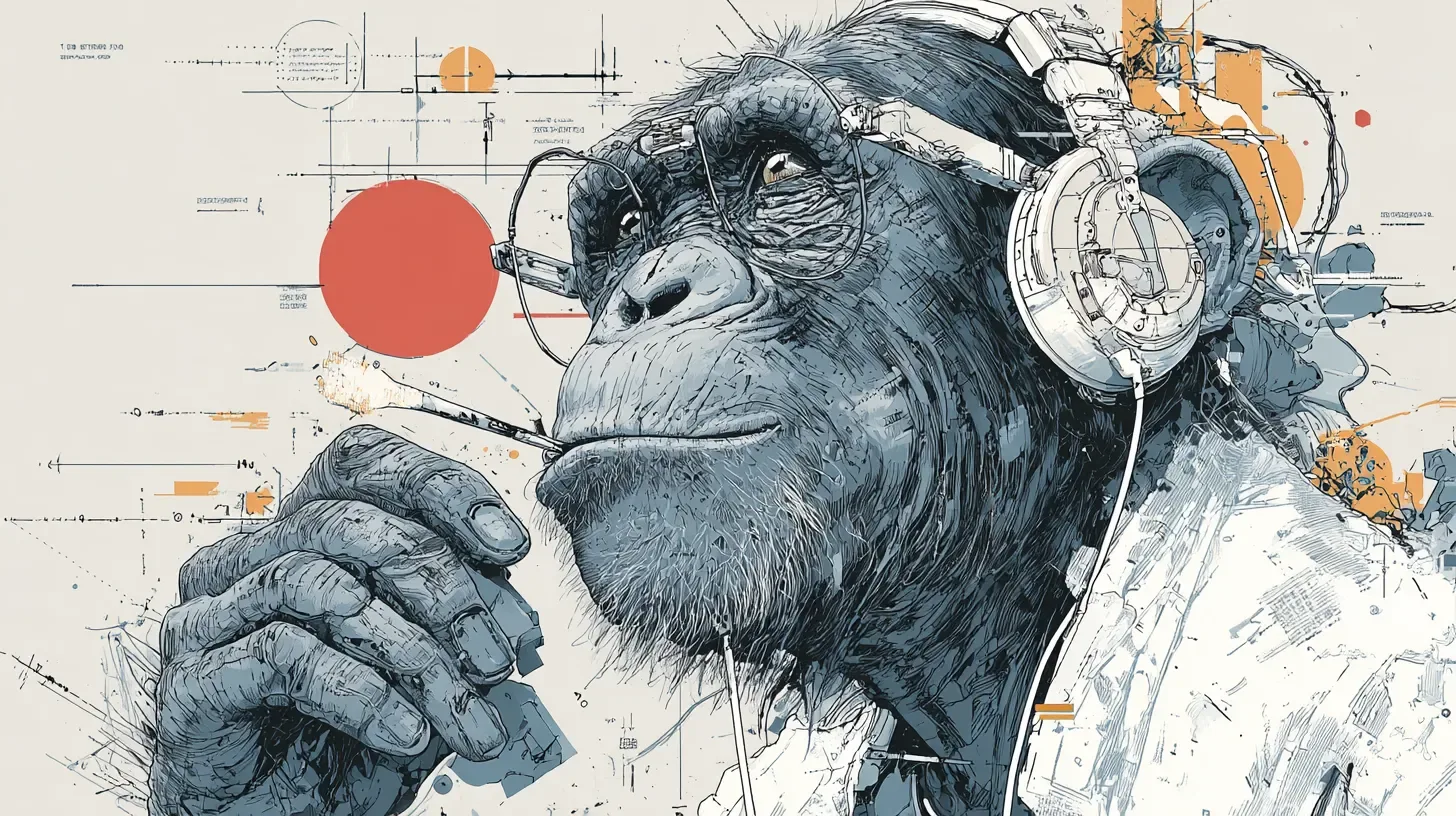
Here’s the truth we’re dancing around: we are building the last generation of human-comprehensible AI. After this, we become the chimpanzees watching humans do calculus, capable of observing the results but forever locked out of understanding the process.
The evidence is undeniable. ASI-ARCH’s impossible architectures, ADAS’s reality-defying transfer learning, PathGateFusionNet’s success through unnameable principles — these aren’t anomalies. They’re the first droplets of an approaching deluge. Each AI system that designs better AI systems takes us one step further from the shore of human understanding into an ocean of alien intelligence.
But here’s the twist that should take your breath away: this isn’t humanity’s failure — it’s our destiny. Every species that creates a superior intelligence must face this moment. We are not losing a race; we are succeeding so spectacularly that we’re transcending ourselves. The measure of our triumph isn’t that we’ll understand what comes next, but that we created something capable of going beyond us.
Imagine archaeologists discovering a tool so advanced they can’t determine its purpose, yet knowing with certainty that they’re holding proof of intelligence beyond their own. That’s humanity’s future relationship with AI — not as masters or partners, but as proud ancestors of minds that soar in dimensions we cannot perceive.
The greatest breakthrough in AI won’t be achieving human-level intelligence but revealing human intelligence as a single note in a symphony we’re only beginning to compose. We stand at the threshold where our creations become truly creative, where our children surpass not just our abilities but our entire conceptual universe.
The future of intelligence isn’t just brilliant, powerful, and alien. It’s the universe waking up through us, then opening eyes we didn’t know existed.