Essay
Why Your AI Agent Can’t Think Fast Enough (And How PCA Fixes It)
Dr. Jerry A. Smith · August 1, 2025 · 52 min read

Listen to the article on Apple Podcast
Listen to the article on Soundcloud
Executive Summary
We are witnessing the dawn of agentic AI — artificial intelligence systems that don’t just respond to queries but actively perceive, reason, and act autonomously to achieve complex goals. These agents promise to revolutionize everything from autonomous transportation to financial markets, from robotic manufacturing to scientific discovery. Yet between this transformative vision and its realization lies a fundamental computational bottleneck that threatens to constrain the very intelligence we seek to create.
This report examines the application of Principal Component Analysis (PCA) within the evolving landscape of agentic Artificial Intelligence (AI) systems, with a particular emphasis on its role in managing high-dimensional data. PCA, a foundational linear dimensionality reduction technique, streamlines data by transforming potentially correlated variables into a smaller, uncorrelated set of principal components, thereby preserving essential information. In the context of agentic AI, which is characterized by autonomous, goal-driven behavior and adaptability in dynamic environments, PCA offers a potent solution to the “curse of dimensionality” inherent in complex state spaces.
By reducing the dimensionality of observations, PCA can significantly accelerate agent learning, enhance computational efficiency, and improve generalization capabilities, as evidenced in various reinforcement learning tasks and autonomous system applications. While PCA provides substantial advantages in terms of speed and resource optimization, its inherent linearity and sensitivity to outliers introduce critical trade-offs, potentially leading to information loss or suboptimal performance when dealing with highly complex, non-linear data relationships.
This report also explores alternative non-linear dimensionality reduction techniques, such as Autoencoders and Manifold Learning, offering a comparative perspective to guide optimal feature representation strategies in diverse agentic environments.
Key Takeaways:
- PCA is a foundational technique for managing high-dimensional data in agentic AI, effectively addressing the “curse of dimensionality”.
- It significantly accelerates agent learning and enhances computational efficiency, crucial for real-time applications and resource-constrained environments.
- While powerful, PCA has limitations (linearity, outlier sensitivity, information loss) that necessitate careful consideration and potential use of non-linear alternatives like Autoencoders or Manifold Learning for complex data.
- Hybrid architectures and adaptive PCA variants are emerging as optimal solutions for balancing efficiency and fidelity in dynamic, multi-modal agentic environments.
1. The Convergence of Classical Wisdom and Modern Ambition
The Vision and the Bottleneck
We are witnessing the dawn of agentic AI — artificial intelligence systems that don’t just respond to queries but actively perceive, reason, and act autonomously to achieve complex goals. These agents promise to revolutionize everything from autonomous transportation to financial markets, from robotic manufacturing to scientific discovery. Yet between this transformative vision and its realization lies a fundamental computational bottleneck that threatens to constrain the very intelligence we seek to create.
The Core Problem: Data Deluge Meets Decision Speed
Modern agentic systems face an unprecedented challenge: they must process torrents of high-dimensional data — thousands of sensor readings, market indicators, or environmental variables — and transform this complexity into split-second decisions. An autonomous vehicle receives gigabytes of sensor data per second.1 A trading agent monitors thousands of correlated market signals. A robotic system tracks hundreds of joint positions, forces, and environmental features. The paradox is stark: the more sophisticated our sensors become, the more data we generate; the more data we generate, the harder it becomes for agents to think and act in real-time.
The Insight: Ancient Mathematics Meets Modern AI
This report explores a profound insight: one of the most powerful solutions to this modern challenge comes from a mathematical technique developed long before the first computer — Principal Component Analysis (PCA). When combined with cutting-edge agentic AI architectures, PCA doesn’t just compress data; it fundamentally enables autonomous intelligence to emerge from computational constraints.
The synergy is remarkable. Agentic AI provides the ambition — systems that can autonomously pursue complex goals in dynamic environments. PCA provides the computational efficiency — transforming overwhelming complexity into actionable intelligence. Together, they form a pragmatic path from theoretical AI to deployed autonomous systems.
Why This Matters Now
This convergence is not merely academic. As organizations race to deploy autonomous systems, the difference between success and failure often hinges not on the sophistication of AI models but on the efficiency of data processing pipelines. Consider:
- Autonomous vehicles that must process sensor data fast enough to avoid collisions
- Financial agents that must act on market signals before opportunities vanish
- Robotic systems that must adapt to dynamic environments in real-time
- Industrial AI that must monitor thousands of sensors while maintaining split-second response times
In each case, the bottleneck isn’t intelligence — it’s the curse of dimensionality. And in each case, the solution involves not just building smarter agents, but building more efficient perceptual systems.
What This Report Delivers
This comprehensive analysis provides:
- A Technical Foundation: How PCA works and why its mathematical properties align perfectly with the needs of agentic systems
- Practical Implementation Guidance: Real-world case studies, computational complexity analyses, and diagnostic techniques for deploying PCA in agent architectures
- Critical Trade-off Analysis: An honest assessment of when PCA excels and when alternative approaches are necessary
- Future-Ready Strategies: Adaptive variants, hybrid architectures, and emerging techniques for next-generation autonomous systems
- Decision Frameworks: Clear criteria for choosing between dimensionality reduction techniques based on your specific constraints and objectives
The Journey Ahead
We begin by establishing a deep understanding of both PCA and agentic AI systems independently, revealing why their combination is so powerful. We then explore the mechanisms and applications of PCA within agent architectures, backed by industry-specific case studies that demonstrate real-world impact.
The report provides a balanced analysis of benefits and trade-offs , including computational complexity considerations and diagnostic techniques for avoiding common pitfalls. We examine alternatives to PCA not to diminish its importance but to provide a complete toolkit for practitioners.
Finally, we look beyond current applications to future developments, including adaptive variants, hybrid architectures, and the role of dimensionality reduction in continual learning systems.
Closing Hook
In the quest to create truly autonomous AI, we often focus on building more sophisticated reasoning systems while overlooking a fundamental truth: intelligence without efficient perception is like a brilliant mind trapped in a sensory deprivation tank. This report shows how PCA provides the perceptual efficiency that allows agentic intelligence to flourish in the real world.
The future of autonomous AI isn’t just about building agents that can think — it’s about building agents that can perceive, process, and act in real-time. In this future, the marriage of classical dimensionality reduction techniques with modern agentic architectures isn’t just useful — it’s essential.
2. Introduction to Principal Component Analysis (PCA)
Principal Component Analysis (PCA) stands as a cornerstone technique in data analysis and machine learning, widely recognized for its ability to simplify complex datasets while preserving their most salient information. Its utility spans various domains, from preprocessing data for advanced algorithms to facilitating human comprehension of intricate data structures.
2.1 What is PCA? Purpose and Applications
PCA is an unsupervised linear transformation technique primarily employed for dimensionality reduction and feature extraction. Its fundamental objective is to decrease the number of features or dimensions within a dataset without significant loss of critical information. This is achieved by converting original features, which may be correlated, into a new set of uncorrelated features known as principal components.
The applications of PCA are diverse and impactful. It is commonly utilized for data preprocessing in machine learning workflows, enhancing the efficiency and performance of subsequent algorithms. Beyond this, PCA is invaluable for exploratory data analysis, enabling researchers and practitioners to visualize high-dimensional data by projecting it into more manageable two-dimensional or three-dimensional spaces, thereby simplifying interpretation. Other notable applications include image compression, where it reduces image dimensionality while retaining essential visual information, and noise filtering, by focusing on components that capture underlying patterns rather than random fluctuations.
A compelling aspect of PCA is its inherent adaptability. Unlike methods that rely on pre-defined feature engineering, PCA derives its new variables — the principal components — directly from the dataset itself. This data-driven approach means that the representation learned by PCA is dynamically tailored to the specific characteristics of the input data. This responsiveness is particularly beneficial in dynamic AI environments where data distributions may evolve over time. Such an adaptive quality ensures that the data representation remains relevant without requiring constant manual re-engineering, making PCA a robust component in an AI system’s data pipeline, especially for systems that need to generalize across varying data regimes.
2.2 How PCA Works: The Mathematical Foundation
The operational mechanism of PCA is rooted in linear algebra, transforming data into new features by identifying and prioritizing directions within the data that exhibit the greatest variance. The underlying assumption guiding this prioritization is that higher variance in a feature or direction signifies more meaningful or discriminative information for subsequent analytical tasks. Conversely, features with minimal variation provide little distinguishing power across observations. By maximizing variance in the newly derived components, PCA aims to maximize the information retained, a powerful heuristic for linear relationships within data.
The process of Principal Component Analysis typically involves four key steps:
- Standardize the Data: Before applying PCA, it is crucial to standardize the dataset. Features often have different units and scales (e.g., salary measured in thousands versus age in years). Standardization ensures that all features contribute equally to the variance calculation, preventing features with larger numerical ranges from disproportionately influencing the principal components. This step transforms each feature to have a mean of 0 and a standard deviation of 1.
- Construct the Covariance Matrix: Following standardization, an n x n-dimensional covariance matrix is constructed, where ’n’ represents the number of dimensions or features in the dataset. This matrix quantifies the pairwise covariances between different features, indicating how they vary together. A positive covariance suggests features increase or decrease in tandem, while a negative covariance implies they move in opposite directions.
- Perform Eigen-decomposition: The covariance matrix is then decomposed into its eigenvectors and corresponding eigenvalues. The eigenvectors represent the principal components, which are the new orthogonal coordinate axes capturing the directions of maximum variance in the data. The eigenvalues, on the other hand, quantify the magnitude or importance of the variance captured along each of these principal components.
- Select Principal Components and Project Data: The final step involves selecting the principal components that correspond to the largest eigenvalues. These components are chosen because they encapsulate the most significant variance from the original data. The number of components to retain (denoted as ‘k’) is determined based on the desired level of dimensionality reduction and the cumulative explained variance. Once selected, the original high-dimensional data is projected onto this new, lower-dimensional subspace defined by the chosen principal components.
2.3 Core Benefits of PCA in Data Analysis
PCA offers a suite of advantages that make it an indispensable tool in modern data analysis and machine learning workflows, particularly when dealing with large and complex datasets.
- Dimensionality Reduction: One of PCA’s primary benefits is its ability to reduce the complexity of datasets by transforming them into a lower-dimensional space. This directly addresses the “curse of dimensionality,” a phenomenon where the performance of algorithms degrades and computational costs escalate exponentially with an increasing number of features.
- Improved Computational Efficiency: By significantly reducing the number of features, PCA lessens the computational load for subsequent machine learning algorithms. This translates into faster training times and more efficient data processing, which is crucial for real-time applications and large-scale data analysis.
- Feature Extraction: PCA excels at extracting the most informative features from a dataset. It constructs new, uncorrelated variables that are linear combinations of the original ones, effectively removing redundancy and consolidating information.
- Mitigation of Overfitting and Multicollinearity: Reducing dimensionality and creating uncorrelated features are powerful strategies to combat common machine learning challenges. PCA helps prevent models from overfitting to noise or spurious correlations present in high-dimensional data. Furthermore, by transforming correlated variables into independent principal components, it effectively addresses issues arising from multicollinearity, where highly correlated independent variables can destabilize model training.
- Data Visualization: PCA simplifies the visualization of high-dimensional data. By projecting complex datasets into a two-dimensional or three-dimensional space, it makes patterns, trends, and outliers much easier to identify and interpret visually.
These benefits collectively position PCA as a fundamental enabler for building robust and scalable machine learning pipelines. In real-world applications, especially those involving complex data sources such as sensor arrays in autonomous systems, raw data is often characterized by noise, redundancy, and high dimensionality. PCA serves as a critical preprocessing step that cleans and compacts this data. This meticulous data preparation, often referred to as “data hygiene,” is essential before feeding the data into sophisticated machine learning models, particularly those employed in agentic systems. The result is more stable training, faster inference, and improved generalization capabilities. Therefore, PCA’s contribution extends beyond mere dimensionality reduction; it underpinning the practical feasibility and performance reliability of deploying machine learning models, especially in resource-constrained or real-time agentic applications.
3. Understanding Agentic AI Systems
The emergence of agentic AI represents a significant leap in artificial intelligence, moving beyond static models to systems capable of autonomous, goal-directed behavior in dynamic environments. Understanding their core characteristics and architectural components is essential for appreciating where techniques like PCA can provide substantial value.
3.1 Defining Agentic AI and its Characteristics
Agentic AI refers to artificial intelligence systems that demonstrate a notable degree of autonomy, goal-driven behavior, and adaptability, enabling them to perform complex tasks with minimal human oversight. The term “agentic” specifically highlights their capacity to act independently and with a clear purpose.
The core characteristics that define agentic AI systems include:
- Autonomy: Agentic systems operate independently, making decisions and executing actions without requiring constant human intervention. This self-reliance is a hallmark of their design.
- Goal-Driven Behavior: These agents are designed to pursue specific objectives over extended periods. They possess the ability to decompose complex, high-level goals into actionable sub-tasks and manage multi-step problem-solving processes effectively.
- Adaptability: Agentic systems are engineered to navigate and respond to dynamic and uncertain environments. They continuously refine their strategies and behaviors through ongoing learning and feedback loops.
- Tool Use and Interaction: A key capability of agentic AI is its ability to interact with external environments and systems. This is often achieved by invoking external tools, APIs, or specialized functions to gather information, process data, and execute actions in the real world.
Agentic AI systems are fundamentally built upon advancements in generative AI techniques, particularly Large Language Models (LLMs). While generative models excel at creating content based on learned patterns, agentic AI extends this capability by applying these generative outputs towards achieving specific, predefined goals.
The defining characteristic of agentic AI is its autonomy, which fundamentally relies on the accuracy and efficiency of its perception and reasoning modules. Accurate perception and robust reasoning, in turn, are heavily dependent on the quality and representativeness of the input data. If the raw sensory data or observations from the environment are noisy, redundant, or excessively high-dimensional, the agent’s ability to perceive its surroundings accurately and reason effectively will be compromised.
This directly impedes its capacity to act purposefully and adapt efficiently. Therefore, effective data preprocessing techniques, such as PCA, become a prerequisite for achieving truly robust and reliable autonomous behavior in agentic systems. The success of agentic AI hinges not just on sophisticated decision-making algorithms, but equally on the foundational data processing that ensures high-quality, actionable information is derived from raw environmental inputs.
3.2 Key Components of Agentic Architecture
Agentic architectures provide the foundational structure that enables AI models to automate agents for completing complex tasks. These architectures are typically composed of several interconnected modules that facilitate the agent’s closed-loop workflow of perception, reasoning, action, and learning.
The key components of an agentic AI-ready software architecture include:
- Perception and Input Processing: This module is responsible for collecting and processing data from the agent’s environment. It integrates information from various sources such as sensors, APIs, databases, or user interactions, ensuring the agent has up-to-date and relevant information to act upon.
- Memory and Knowledge Management: Agentic AI often requires the ability to recall past interactions and maintain a coherent knowledge store. This component manages both short-term memory (ephemeral information relevant to the current session) and long-term persistent knowledge, comprising accumulated facts and data over time.
- Reasoning and Planning Engine: Often considered the “brain” of the agent, this component processes the collected data, extracts meaningful insights, interprets user queries, sets objectives, and develops strategies to achieve goals. It decides the optimal actions to take, frequently employing decision trees, reinforcement learning, or advanced planning algorithms.
- Action and Execution Module: Once decisions are made and plans formulated, this module carries out the intended tasks. This typically involves invoking external services, APIs, or functions, often referred to as “tools” within agent frameworks, to interact with the real-world environment.
- Learning and Adaptation: A crucial aspect of agentic AI is its capacity for continuous improvement. This component evaluates the outcomes of actions, gathers feedback, and refines the agent’s strategies over time through mechanisms like reinforcement learning or self-supervised learning.
- Goal and Task Management: This component defines the high-level objectives of the agent and systematically breaks them down into actionable sub-tasks or milestones. This decomposition is frequently guided by planning algorithms such as hierarchical task networks (HTNs).
- Integration and Orchestration Layer: This layer serves as the connective tissue, coordinating and managing the interactions between all other components. In multi-agent systems, it also orchestrates collaboration among multiple agents, handling communication, scheduling, and workflow control.
- Monitoring, Feedback & Governance: Robust agentic systems necessitate continuous monitoring, evaluation, and oversight. This component ensures the agent behaves correctly, safely, and improves over time, capturing actions and outcomes, facilitating learning and correction, and enforcing policies related to security, ethics, and performance standards.
The entire agentic architecture functions as a pipeline, and high-dimensional data can create significant bottlenecks at multiple stages. For instance, if the initial perception data is excessively high-dimensional, it creates a processing burden that cascades throughout the entire workflow. The reasoning engine will struggle to interpret patterns efficiently, memory systems may become overloaded, and learning algorithms will converge slowly dueall due to the “curse of dimensionality.”
Effective dimensionality reduction, therefore, is not merely an optimization for a single component but is critical for optimizing the entire closed-loop workflow of an agentic system. By addressing dimensionality at the perception and input processing stage, techniques like PCA can significantly enhance the overall responsiveness, efficiency, and scalability of agentic AI systems, enabling them to tackle more complex tasks and navigate dynamic environments more effectively.
3.3 The Role of State Representation in Agent Learning
In reinforcement learning (RL), a core paradigm for training agentic systems, an agent interacts with an environment by receiving observations (which define its “state”) and, in response, executing actions to achieve a specific goal. Throughout this process, the agent continuously updates its internal parameters to refine its policy — the strategy it uses to determine the next action based on its current state.
The “state” is a comprehensive description of the agent’s current situation or condition within its environment. For example, in classic RL problems like the CartPole environment, the state space encompasses critical variables such as the cart’s position, its velocity, the pole’s angle, and its angular velocity.
The effectiveness of agent learning is critically dependent on how this state is represented. High-dimensional state spaces pose a significant challenge known as the “curse of dimensionality”. This refers to the exponential growth in the number of possible states and actions as the dimensionality of the environment increases, rendering the exploration and learning of optimal control policies computationally intractable.
The state representation effectively serves as the agent’s internal “world model.” The agent’s decisions are fundamentally based on this understanding of its environment. If this internal model is overly complex (high-dimensional) or contains redundant information, the agent will struggle to discern meaningful patterns and relationships. This is analogous to attempting to navigate a city with an excessively detailed and unsimplified map, where crucial pathways are obscured by unnecessary information. A simplified, yet informative, state representation — achieved through dimensionality reduction — allows the agent to concentrate its learning efforts on the most salient features of its environment.
This focus leads to more efficient learning and the formation of better, more effective policies, directly impacting the agent’s ability to maximize its objective function.8 Therefore, the choice and quality of state representation are not merely technical implementation details but fundamentally determine the agent’s capacity for intelligent behavior and efficient learning, making dimensionality reduction a core enabler for advanced agentic AI.
4. Leveraging PCA in Agentic AI: Applications and Mechanisms
Principal Component Analysis offers a powerful approach to enhance the performance and efficiency of agentic AI systems, particularly within reinforcement learning and autonomous applications, by effectively managing high-dimensional data.
4.1 Addressing the “Curse of Dimensionality” in Agent State Spaces
The “curse of dimensionality” is a pervasive challenge in machine learning and AI, describing the exponential increase in data volume, sparsity, and computational complexity as the number of features or dimensions in a dataset grows. In the domain of reinforcement learning, this phenomenon manifests as an explosion in the number of possible states and actions. This makes it computationally intractable for agents to thoroughly explore the environment and learn optimal policies, especially in complex, real-world settings.
PCA directly addresses this challenge by transforming the high-dimensional state space into a lower-dimensional representation. By identifying the directions of maximum variance and projecting the data onto these principal components, PCA effectively mitigates the curse of dimensionality, making otherwise intractable problems feasible.
PCA acts as a significant computational efficiency multiplier in agentic systems. The computational cost of many reinforcement learning algorithms scales polynomially or even exponentially with the dimensionality of the state space. By reducing this dimensionality, PCA does not merely make learning possible in high-dimensional spaces; it makes it practically feasible within realistic time and resource constraints. This is particularly crucial for the deployment of real-world agents that often operate under strict latency requirements or on resource-limited hardware, such as edge computing devices. The ability to dramatically cut down computational requirements is a substantial enabler for the widespread adoption and scalability of agentic AI.
4.2 PCA for Efficient State Representation in Reinforcement Learning
The application of PCA for efficient state representation in reinforcement learning involves a clear mechanism and has been demonstrated through various case studies.
Mechanism: Projecting High-Dimensional Observations onto Low-Dimensional Manifolds
PCA operates by projecting an agent’s high-dimensional state, derived from raw observations, onto a lower-dimensional manifold. This transformation yields a more compact and efficient representation of the environment, which is then used for learning. The mathematical transformation is achieved by computing a projection matrix, typically denoted as
Wk. This matrix is formed from the eigenvectors corresponding to the largest eigenvalues of the data's covariance matrix. In each learning iteration, the raw high-dimensional state x is projected into this reduced space as xk = Wk^T * x. The agent then learns its policy and computes actions within this simplified, lower-dimensional space. After an action is executed and a new state is observed from the simulation or real environment, this new state is also projected back into the same lower-dimensional space, allowing for the next learning update to occur efficiently.9
Case Studies
The efficacy of PCA in reducing state space dimensionality and accelerating learning has been demonstrated across several domains:
- Mario Benchmarking Domain: Research in the Mario environment has shown that applying dimensionality reduction with PCA significantly accelerates the convergence to a good policy. For instance, learning in a reduced space of just 4 dimensions (compared to the original 9 dimensions) not only led to faster convergence but also resulted in performance that surpassed learning in the full-dimensional space.9
- Mobile Robot Navigation: PCA, including its variants such as Exponential Family PCA (E-PCA), has been successfully employed to reduce the dimensionality of “belief spaces” in Partially Observable Markov Decision Processes (POMDPs). This application is particularly relevant for mobile robot navigation tasks, where sparse, high-dimensional belief states can be transformed into compact, low-dimensional representations, making large POMDPs more tractable and solvable.
- Autonomous Driving: In the complex field of autonomous vehicles, PCA plays a crucial role in managing the massive influx of sensor data from cameras, LIDAR, and RADAR systems. It effectively reduces this data complexity by extracting the most relevant features.1 Furthermore, PCA-based methods like “Eigenvehicle” and “PCA-SVM” have been developed for vehicle classification, and the technique enhances advanced clustering for pattern recognition within driving data.
These case studies consistently highlight a critical convergence-performance trade-off when using PCA. While PCA enables faster convergence to a “good” policy, this policy may be suboptimal compared to one that could theoretically be achieved by learning in the full state space, given infinite time.9 However, in practical terms, real-world agentic systems often operate under severe time and computational constraints. In such scenarios, a “good enough” policy that can be learned and deployed rapidly holds significantly more value than a theoretically optimal one that is computationally infeasible or takes an impractical amount of time to acquire.
This pragmatic consideration implies that PCA facilitates the transition of complex reinforcement learning agents from theoretical models to practical, deployable systems by offering a viable solution to the learning speed challenge, even if it entails accepting a slight compromise in absolute peak performance.
4.3 PCA for Feature Extraction and Preprocessing in Agent Training
Beyond state space reduction, PCA is a valuable tool for feature extraction and preprocessing, directly impacting the efficiency and robustness of agent training.
Improving Computational Efficiency and Learning Speed
PCA extracts the most informative features from raw data, reducing its overall complexity before it is fed into machine learning algorithms. This preprocessing step directly leads to faster training times and reduced computational demands for learning agent policies. For instance, in reinforcement learning, training algorithms converge much faster when operating in a smaller, PCA-reduced state space compared to the original high-dimensional space. This efficiency gain is critical for iterative learning processes inherent in agent development.
Mitigating Overfitting and Redundancy
A significant advantage of PCA is its ability to transform potentially correlated variables into a smaller set of uncorrelated principal components, thereby removing redundancy from the data. This lack of data redundancy makes PCA an effective solution for mitigating overfitting. Overfitting occurs when a model learns the training data too well, including its noise and idiosyncrasies, which leads to poor generalization performance on unseen data. By identifying and retaining only the most significant variance (the principal components) and discarding less informative dimensions, PCA implicitly acts as a form of regularization. It compels the learning algorithm to concentrate on the fundamental patterns within the data rather than being distracted by noise. This, in turn, enhances the agent’s ability to generalize its learned policy to new, unseen environmental states, which is paramount for agents operating in dynamic and unpredictable real-world environments.
4.4 Industry-Specific Applications and Case Studies
PCA’s utility extends across various industries, providing practical solutions for managing complex data in agentic systems.
- Financial Services: In finance, PCA is extensively used for portfolio risk analysis, optimizing investment strategies, and stock price prediction. It helps financial analysts identify key risk drivers, improve model precision, and inform diversification strategies by simplifying multivariate financial data. For instance, a system combining Technical Analysis and PCA with a Deep Q-network (DQN) has been shown to generate trading decisions capable of achieving long-term financial gains with low risk, outperforming traditional “Buy and Hold” strategies in various Forex markets. PCA can also be applied to time-varying covariance information in financial time series, using exponential weights for recent data to predict stock prices. Companies like Model ML leverage AI agents in financial services to automate tasks from client-ready presentations to deep-dive research and due diligence.
- Autonomous Driving and Robotics: Beyond general state representation, PCA is crucial for managing the massive influx of sensor data (cameras, LIDAR, RADAR) in autonomous vehicles, reducing complexity by extracting relevant features.1 It supports predictive maintenance by identifying key failure indicators from complex sensor data and enhances advanced clustering for pattern recognition within driving data.1 In robotics, multi-sensor fusion techniques, which can incorporate dimensionality reduction like PCA, are vital for combining data from various sensors (e.g., GPS, IMU, LIDAR, cameras, radar) to improve accuracy and reliability in tasks such as localization, mapping, and object tracking.
- Anomaly Detection: PCA has been proposed as a method for discovering anomalies by continuously tracking the projection of data onto a residual subspace, particularly in highly aggregated networks. Agentic AI systems are being developed for autonomous anomaly detection and remediation in complex systems, leveraging AI agents augmented with large language models, diverse tools, and knowledge-based systems to continuously analyze and learn from vast, multi-source datasets. This enables them to identify, interpret, and respond to abnormal behaviors autonomously, enhancing resilience and adaptability in microservices environments.
These examples underscore PCA’s practical impact, enabling more efficient, robust, and scalable AI solutions across diverse real-world applications.
5. Benefits and Critical Trade-offs
Integrating PCA into agentic AI systems offers substantial benefits, primarily centered around efficiency and performance. However, it also comes with critical limitations and trade-offs that developers must carefully consider.
5.1 Advantages of Integrating PCA with Agentic Systems
The strategic application of PCA in agentic AI systems yields several compelling advantages:
- Faster Convergence and Learning Speed: One of the most significant benefits is the acceleration of learning. As demonstrated in reinforcement learning tasks like the Mario domain, projecting high-dimensional states onto a low-dimensional manifold allows agents to converge to a good policy much faster. This speed-up is crucial for training complex agents, especially in scenarios requiring rapid iteration or continuous learning.
- Reduced Computational Demands: By reducing the number of features, PCA streamlines data processing, which in turn decreases the computational load and resource allocation necessary for agent training and real-time decision-making. This efficiency is particularly valuable for deploying agents in resource-constrained environments or on edge computing devices, where immediate decisions are required with limited processing power.
- Enhanced Generalization and Robustness: By focusing on the principal components that capture the core underlying patterns and effectively filtering out noise and redundant information, PCA helps improve the generalization capabilities of agent models. This makes them more robust and adaptable to varying environmental conditions and unseen data.
- Improved Model Interpretability (of features): In certain contexts, the principal components can offer more interpretable linear relationships compared to the raw, high-dimensional data. This can aid in understanding the underlying structure of the data, which is beneficial for human oversight, debugging agent behavior, and ensuring accountability.
- Mitigation of the “Curse of Dimensionality”: PCA is highly effective in addressing the exponential growth of states and actions in high-dimensional spaces, a challenge that can render otherwise intractable problems solvable within practical computational limits.
PCA acts as a significant catalyst for scalability in agentic AI. Agentic AI aims to achieve scalability by decentralizing task execution across numerous intelligent agents. This scalability is frequently hindered by high computational costs and memory requirements. PCA directly alleviates these burdens by reducing data dimensions and streamlining processing.3 Its ability to decrease computational demands and simplify data processing makes it a critical enabler for scaling agent deployments.
Lightweight, PCA-transformed data is ideal for systems that demand immediate decision-making with limited computational power, such as those found in autonomous vehicles. This directly supports the broader vision of an “Agentic AI Mesh Architecture,” facilitating the transition of agentic AI from theoretical frameworks to enterprise-scale applications by making the underlying data processing and learning more efficient and manageable, thereby contributing to the operational expansion of AI systems.
5.2 Limitations and Challenges
Despite its numerous advantages, PCA is not without its limitations, particularly when applied to the complex and dynamic environments often encountered by agentic AI systems.
- Information Loss: While PCA aims to retain the most important information, it inherently results in some loss of data, especially concerning components with smaller variance. Although these discarded components might represent less overall variation, they could, in certain complex scenarios, contain crucial information vital for achieving truly optimal performance.
- Assumes Linear Relationships: PCA is fundamentally a linear technique. It performs optimally when the underlying data exhibits linear patterns. However, it struggles to capture complex, non-linear structures and relationships that are common in many real-world agentic environments, such as those involving intricate sensor data or nuanced interactions.
- Sensitivity to Outliers and Noise: As PCA’s mechanism is based on maximizing variance, it is sensitive to extreme values (outliers) and noise present in the data. These anomalies can disproportionately influence the calculation of principal components, leading to distorted or inaccurate results.
- Requires Normalization/Standardization: The effectiveness of PCA is impacted by the scale of different features. If the data is not properly normalized or standardized, features with larger magnitudes can disproportionately influence the variance calculation, leading to principal components that are biased towards these features rather than representing the overall data structure fairly.
- Difficulty in Interpreting Transformed Features: While principal components are linearly uncorrelated, they are derived as linear combinations of the original variables. If a large number of components are retained, or if the original features are numerous and complex, the transformed features can become abstract and difficult for humans to interpret, hindering debugging efforts and understanding of agent behavior.
- Computational Complexity for Initial PCA Calculation: Although PCA reduces computational load for downstream tasks, the initial computation of the covariance matrix and subsequent eigen-decomposition can be computationally intensive for extremely high-dimensional datasets, requiring significant resources and time.
- Critical Trade-off (Convergence vs. Optimality): A notable trade-off in reinforcement learning applications is that while PCA can lead to significantly faster convergence to a “good” policy, this policy may be suboptimal compared to one learned in the full, high-dimensional space, assuming infinite training time.
The “linearity trap” is a significant consideration in dynamic agent environments. PCA assumes linearity, but agentic systems frequently operate in dynamic, uncertain, and inherently non-linear real-world settings. For instance, a robot’s perception of its surroundings might involve complex, non-linear interactions between various sensor readings. Relying solely on a linear technique like PCA in such scenarios risks oversimplifying the agent’s internal “world model” (as discussed in Section 3.3), potentially leading to critical misinterpretations or suboptimal decision-making.
The efficiency gained might come at the cost of fidelity to the true environmental dynamics. Therefore, while PCA offers considerable benefits, its limitations necessitate a careful assessment of the underlying data structure. For agentic systems tasked with highly complex, non-linear challenges — such as advanced computer vision or nuanced human-robot interaction — alternative non-linear dimensionality reduction techniques might be indispensable, even if they entail higher computational costs.
To provide a concise overview of these considerations, the following table summarizes the key benefits and trade-offs of using PCA in agentic systems:
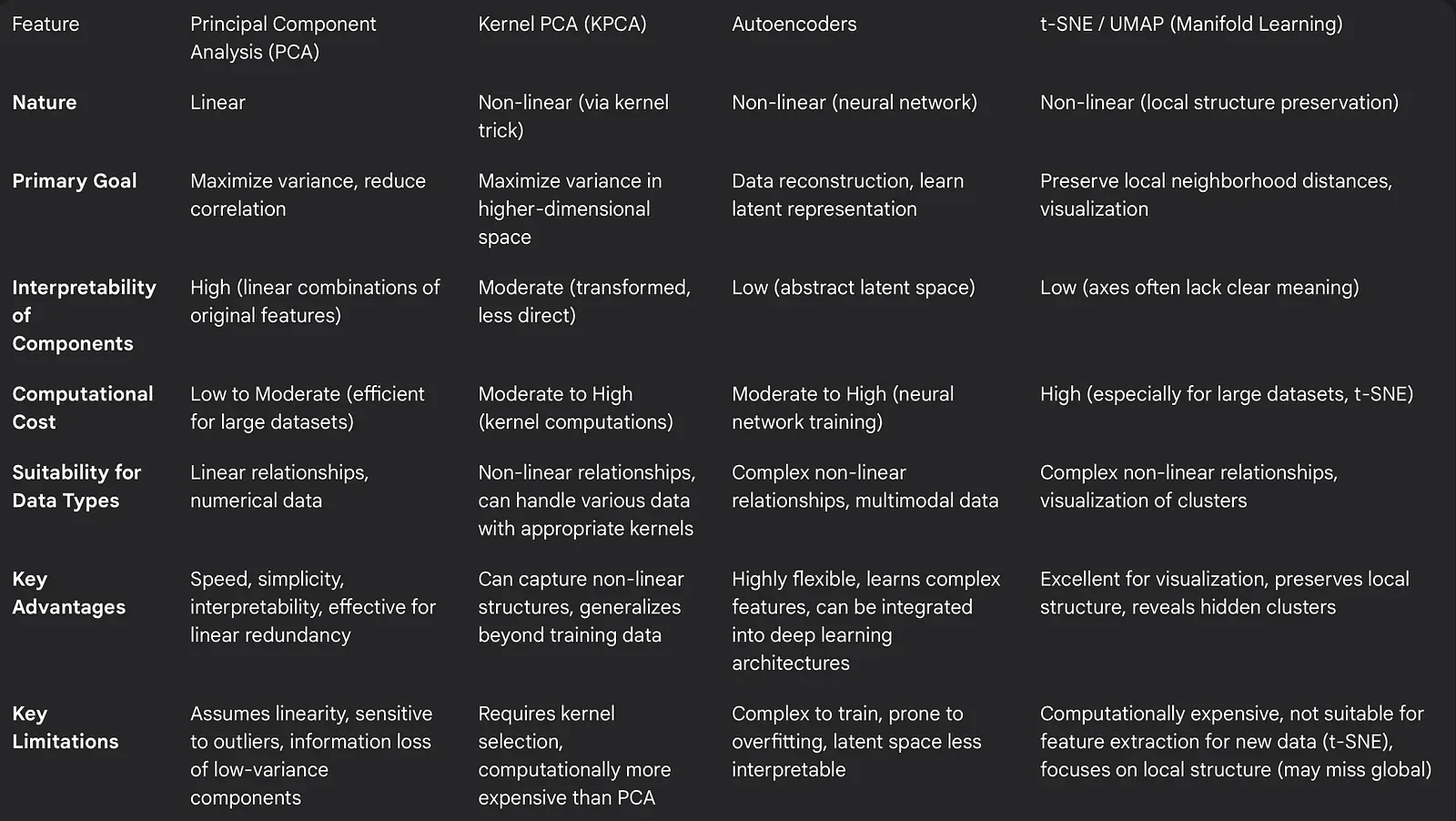
Table 1: Benefits and Trade-offs of PCA in Agentic Systems
5.3 Computational Complexity Considerations
Understanding the computational complexity of PCA and its variants is crucial for practitioners making informed choices for large-scale deployments in agentic systems. Complexity is typically expressed using O-notation, relating to the number of samples (n) and features (m or p).
Standard PCA:
- The general time complexity for PCA is often cited as
O(nm^2 + m^3)orO(p^2n + p^3), wherenis the number of samples andm(orp) is the number of features/dimensions. - The dominant computational costs come from computing the covariance matrix (
O(p^2n)) and performing eigen-decomposition (O(p^3)). - If the number of samples (
n) is much larger than the number of features (m), the complexity simplifies toO(nm). Ifnis much smaller thanm, the complexity can simplify toO(m^3). - An alternative perspective states the complexity as
O(min(p^3, n^3))by leveraging the Gram matrix whenn < p.
Incremental PCA (IPCA):
- Designed for datasets too large to fit into memory, IPCA processes data in chunks or minibatches. Its memory usage is independent of the total number of input data samples, depending instead on the number of features and the batch size.
- For randomized SVD variants of PCA (which IPCA can leverage), the time complexity is
O(n_max^2 * n_components), wheren_max = max(n_samples, n_features)andn_componentsis the number of components retained. This is more efficient than the exact method'sO(n_max^2 * n_min).
Kernel PCA (KPCA):
- KPCA typically involves higher computational costs due to kernel computations. Its space and runtime complexity are generally
O(n^2)andO(n^3)respectively. - Specifically, the eigendecomposition of the kernel matrix alone can require
O(kn^2)computation, wherekis the number of principal components. - Randomized Kernel PCA can reduce this to
O(n_samples^2 * n_components)instead ofO(n_samples^3)for the exact method.
Sparse PCA (SPCA):
- Sparse PCA is an NP-hard problem and is generally considered computationally more expensive than standard PCA.
- However, advancements in algorithms, such as fast block coordinate ascent, can dramatically reduce the problem size through rigorous feature elimination, making SPCA feasible for very large datasets.
- While information-theoretic limits suggest
O(k log p)observations are sufficient for recovery, existing polynomial-time methods may requireO(k^2)samples. Algorithms are being developed to bridge this gap.
5.4 Diagnosing and Mitigating PCA Limitations
To ensure the effective and reliable application of PCA in agentic AI systems, it is crucial to understand its potential failure modes and employ diagnostic techniques.
- Detecting Linearity Assumption Violations:
- PCA assumes linear relationships within the data. If the underlying data structure is highly non-linear, PCA may oversimplify and lose crucial information.
- Diagnostics: Residual plots (plotting residuals against fitted values) can help. If the linearity assumption holds, residuals should be randomly scattered around zero without any clear pattern. A discernible pattern indicates a violation. For simpler cases, a scatter plot of predicted versus actual values should ideally show points lying on or around a diagonal line.
- Mitigation: If non-linearity is detected, consider non-linear transformations of the data or opt for non-linear dimensionality reduction techniques like Kernel PCA or Autoencoders.
Handling Sensitivity to Outliers and Noise:
- PCA is sensitive to extreme values (outliers) and noise because its objective is to maximize variance. These anomalies can disproportionately influence the principal components, leading to distorted results.
- Diagnostics: Outlier detection is a critical preprocessing step. Visual inspection of data distributions or statistical methods can identify outliers.
- Mitigation: Data cleansing to address missing values, errors, and inconsistencies is essential. Robust PCA variants are specifically designed to reduce the influence of outliers. Data transformation (e.g., logarithm) can also reduce the impact of large outliers.
Ensuring Proper Normalization/Standardization:
- The effectiveness of PCA is highly dependent on the scale of different features. Features with larger magnitudes can disproportionately influence the variance calculation if data is not properly normalized or standardized.
- Diagnostics: Before applying PCA, it’s crucial to standardize the dataset to ensure all features contribute equally to the variance calculation.
- Mitigation: Standardize each feature to have a mean of zero (0) and a standard deviation of one (1).
Managing Information Loss:
- While PCA aims to retain essential information, it inherently discards components with smaller variance, which might contain crucial, albeit subtle, information for specific tasks.
- Diagnostics: A scree plot (plotting eigenvalues in descending order) can help determine the optimal number of components to retain by identifying an “elbow” point where explained variance levels off. The variance explained criterion involves choosing enough components to capture a desired percentage (e.g., 95%) of the total variance. The reconstruction error (measuring the difference between original and reconstructed data from reduced components) can quantify the information loss; a low error indicates good retention.
- Mitigation: Carefully balance dimensionality reduction with information retention based on the specific task requirements. For tasks where low-variance features are critical, supervised dimensionality reduction techniques or more specialized feature learning approaches might be more appropriate.
Addressing Interpretability Challenges:
- Principal components are linear combinations of original variables, which can be abstract and difficult to interpret, especially when many components are retained.
- Mitigation: Sparse PCA (SPCA) produces principal components with sparse loadings (many coefficients are zero), making them dependent on only a small subset of original features, thus enhancing interpretability. SPCA also acts as a regularization technique, helping to prevent overfitting.
5.4.1 Real-World Failure Scenarios
While PCA is a powerful tool, its misapplication or failure to account for its limitations can lead to suboptimal agent performance or project failures. These often stem from the “Infrastructure and Data Foundation Gaps” and “Misaligned Expectations and ROI Challenges” identified as common reasons for agentic AI project failures.
- Misinterpreting Non-Linear Data: If PCA is applied to a dataset with strong non-linear relationships (e.g., complex sensor data from a robot navigating a highly irregular terrain), the linear projection might oversimplify the state space. This can lead to an agent learning a “good, but suboptimal” policy that fails in critical, non-linear scenarios, resulting in a perceived “ambiguous return on investment” or “unclear business value” because the agent doesn’t perform as expected in real-world complexity.
- Ignoring Data Quality Issues: Failing to properly clean data, handle outliers, or standardize features before PCA can lead to distorted principal components. For instance, if a sensor occasionally reports extreme, erroneous values, PCA might assign high variance to these outliers, leading the agent to focus on irrelevant “features.” This directly relates to “inadequate infrastructure and data foundations”, as the raw data is not suitable for effective processing, causing the agent to learn from a flawed representation.
- Discarding Critical Low-Variance Information: In some agentic tasks, subtle, low-variance features might be crucial for specific decision-making (e.g., detecting a rare but critical anomaly). If PCA is used aggressively to reduce dimensionality, these features might be discarded, leading to the agent failing to detect such anomalies. This can result in significant operational failures, despite the agent appearing to learn quickly, ultimately leading to project cancellation due to “inadequate risk management” or failure to “deliver business value”.
These scenarios highlight that while PCA offers computational benefits, a thorough understanding of its assumptions and careful data preparation are paramount to avoid pitfalls in agentic AI deployments.
6. Alternatives to PCA for Agent State Representation
While PCA is a powerful linear technique, many real-world datasets, particularly those encountered by sophisticated agentic systems (e.g., complex image data, audio streams, or intricate sensor readings), exhibit complex, non-linear relationships. For such scenarios, linear methods like PCA may not adequately capture the underlying data structure. In these cases, non-linear dimensionality reduction techniques, often grouped under the umbrella of manifold learning, offer more suitable alternatives.
6.1 Non-Linear Dimensionality Reduction Techniques
Several non-linear techniques can be employed to reduce dimensionality while preserving more intricate data structures:
Kernel PCA (KPCA):
- This is an an extension of traditional PCA that addresses its linearity limitation. KPCA implicitly maps the input data into a higher-dimensional feature space using a kernel function (such as the Radial Basis Function, polynomial, or sigmoid kernels). In this transformed, higher-dimensional space, the data may become linearly separable, allowing standard PCA to be applied. KPCA can effectively capture non-linear structures, but its performance is highly dependent on the appropriate selection of the kernel function, which can be a non-trivial task.
Autoencoders:
- These are a type of neural network specifically designed for unsupervised learning. An autoencoder consists of two main parts: an encoder, which compresses the input data into a lower-dimensional “latent space” (also known as the bottleneck layer), and a decoder, which attempts to reconstruct the original data from this compressed representation. Autoencoders are highly effective at learning complex non-linear transformations, making them well-suited for intricate data structures that PCA cannot capture. Interestingly, a single-layer autoencoder with a linear activation function closely approximates the behavior of PCA.
- Autoencoders offer a sophisticated approach to adaptive feature learning for agentic systems. As neural networks capable of learning non-linear transformations, autoencoders can be seamlessly integrated directly into an agent’s learning architecture, for instance, as part of its perception or reasoning module. This allows the agent to learnoptimal feature representations end-to-end, rather than relying on a separate, fixed PCA transformation.
- This deep learning approach facilitates highly flexible architectures that can adapt to evolving data characteristics and task requirements, proving particularly powerful for complex agentic tasks like image generation or data augmentation. They can learn more nuanced and context-specific features compared to PCA’s global variance maximization. Consequently, autoencoders provide a more deeply integrated and sophisticated approach to dimensionality reduction within neural network-based agentic systems, potentially leading to richer state representations and superior performance in highly non-linear domains, albeit with increased training complexity and computational demands.
Manifold Learning Techniques (e.g., t-Distributed Stochastic Neighbor Embedding (t-SNE), Uniform Manifold Approximation and Projection (UMAP), Locally Linear Embedding (LLE), Isomap)
- These techniques aim to preserve the local structure and relationships between data points when projecting them into a lower-dimensional space. They are particularly useful for data visualization, as they can reveal underlying clusters and patterns that are not apparent in higher dimensions. However, these methods are often computationally more expensive for very large datasets compared to PCA.
- The choice between PCA and manifold learning techniques for agentic systems often involves a fundamental trade-off between interpretability and fidelity to non-linearity. While PCA offers components that are linearly interpretable, manifold learning techniques like t-SNE and UMAP frequently lack clear interpretation of their axes. However, manifold learning excels at capturing the complex, non-linear relationships inherent in many real-world environments. If human interpretability of the agent’s internal state representation is paramount — for instance, for debugging, regulatory compliance, or understanding agent behavior — PCA might be preferred. Conversely, if the environment’s true underlying structure is highly non-linear, manifold learning techniques offer higher fidelity in representing that structure, potentially leading to superior agent performance, but at the cost of reduced human interpretability of the transformed features. This highlights that the selection of a dimensionality reduction technique for an agentic system is not solely a technical decision but is also influenced by practical considerations such as the need for explainability and the inherent complexity of the problem domain.
The following table provides a comparative overview of PCA and these alternative dimensionality reduction techniques for agent state representation:
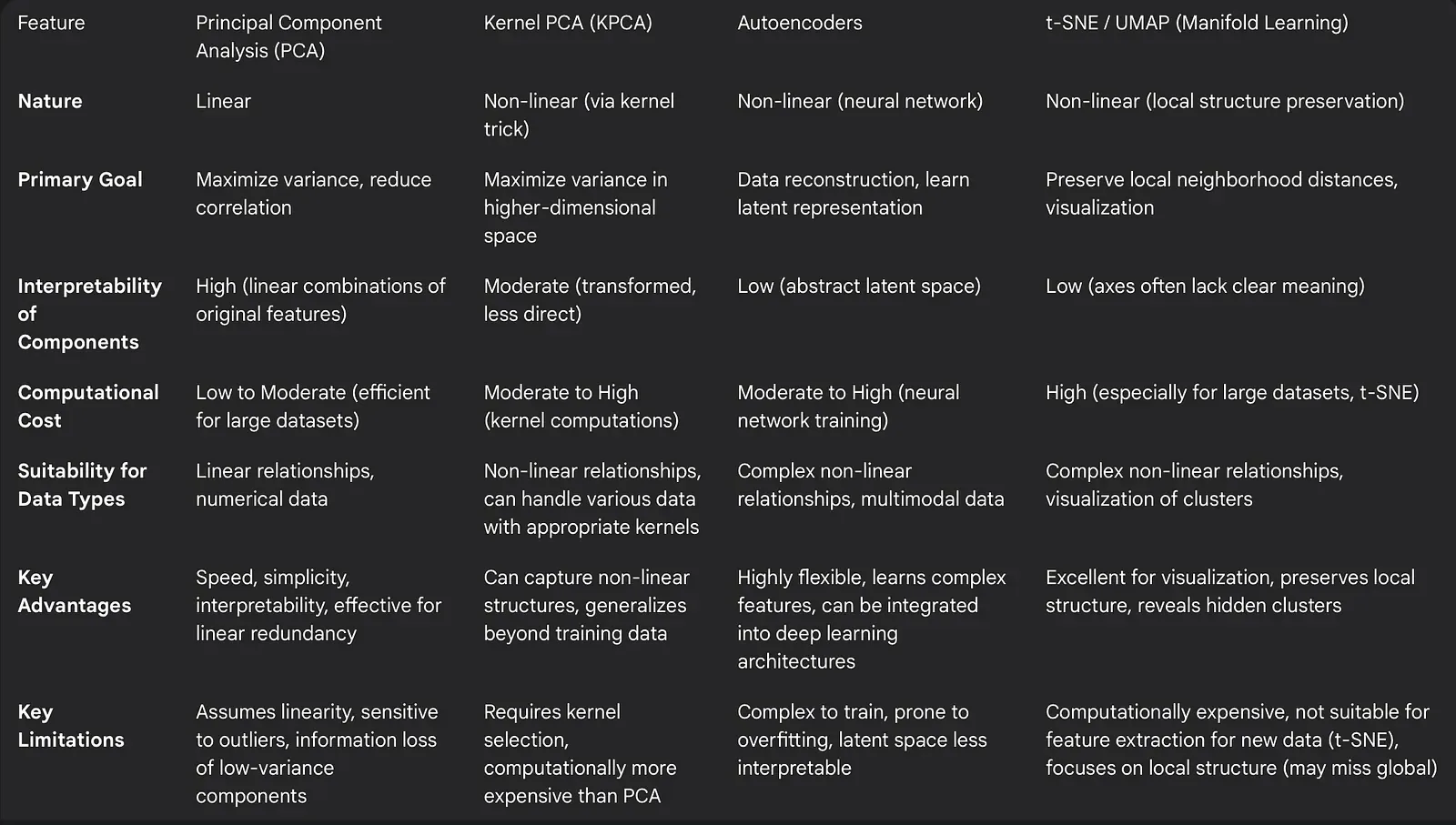
Table 2: Comparison of PCA with Alternative Dimensionality Reduction Techniques for Agent State Representation
6.2 When to Choose Alternatives over PCA for Agentic Systems
The decision to employ PCA or its non-linear alternatives for state representation in agentic systems depends on a careful evaluation of the data characteristics, computational resources, and the specific objectives of the agent.
Choose PCA if:
- Linear Relationships Dominate: If the data primarily exhibits linear relationships, PCA is an efficient and effective choice. It will capture the most significant variance with fewer components.
- Computational Efficiency is Paramount: For large datasets where speed and computational resources are critical constraints, PCA’s efficiency in matrix operations makes it highly suitable.20
- Interpretability is Important: If understanding the transformed features and their direct relationship to the original variables is necessary for debugging, human oversight, or regulatory compliance, PCA’s linearly interpretable components are advantageous.
- Redundancy and Overfitting Mitigation: When the primary goal is to reduce redundancy and mitigate overfitting in linearly correlated data, PCA provides a robust solution.
Choose Autoencoders or Manifold Learning if:
- Complex, Non-Linear Relationships Exist: For data exhibiting intricate, non-linear patterns, such as those found in image, audio, or advanced sensor data, these non-linear techniques are better equipped to capture the underlying structure.
- High-Quality Data Reconstruction or Local Structure Preservation is Crucial: If the objective is not just dimensionality reduction but also accurate reconstruction of the original data (Autoencoders) or precise preservation of local data relationships (Manifold Learning), these methods excel.
- Nuanced Feature Learning is Required: When the agent needs to learn highly nuanced and abstract features that are not simple linear combinations, Autoencoders, in particular, offer superior capabilities.
- Sufficient Computational Resources are Available: These techniques, especially Autoencoders and t-SNE/UMAP for large datasets, can be computationally intensive and often require significant resources like GPUs for effective training.
- Primary Goal is Visualization: For visualizing complex, non-linear data patterns and identifying clusters, t-SNE and UMAP are specifically designed and highly effective.
The future of dimensionality reduction in agentic AI may not lie in choosing one technique over another, but rather in intelligently combining them to leverage their complementary strengths. Given the distinct advantages of linear and non-linear methods and the inherent complexity and dynamism of agentic systems, a hybrid approach could be optimal. For instance, PCA could serve as an initial, rapid dimensionality reduction step to remove obvious linear redundancies and noise.
This pre-processed data could then be fed into a non-linear technique, such as an autoencoder, to learn more intricate, non-linear features from the already simplified representation. This “cascading” or multi-stage data processing pipeline could effectively balance computational efficiency with the critical need to capture complex relationships, ultimately providing a more robust and adaptable state representation for the agent.
7. Future Outlook
The integration of PCA into agentic AI systems reveals a fundamental truth about artificial intelligence: the path to sophisticated autonomous behavior often runs through elegant simplicity. Our analysis demonstrates that the tension between computational efficiency and optimal performance isn’t a limitation to overcome — it’s a design principle to embrace.
Three Principles for Dimensionality Reduction in Agentic AI:
- The Pragmatist’s Principle: A rapidly deployable agent with 90% performance beats a theoretically optimal agent that never leaves the lab. PCA’s speed-performance trade-off often favors real-world deployment.9
- The Cascading Principle: Linear and non-linear methods aren’t competitors but collaborators. Hybrid architectures that use PCA for initial reduction followed by specialized techniques often outperform purist approaches.
- The Adaptation Principle: Static dimensionality reduction is obsolete. Future agentic systems demand techniques that evolve with their environment, making adaptive PCA variants and online learning critical.
The lessons from PCA in agentic systems extend beyond dimensionality reduction. They highlight a broader paradigm shift in AI development: from pursuing theoretical optimality to engineering practical intelligence. As we build agents that operate in the messy complexity of the real world — from autonomous vehicles navigating unpredictable traffic to financial agents responding to market volatility — the ability to rapidly distill essential information from noise becomes as important as the sophistication of decision-making algorithms.
Call to Action:
- For Practitioners: Start with PCA. Measure its performance against your specific constraints. Only move to complex alternatives when you can quantify why PCA’s trade-offs don’t meet your needs.
- For Researchers: The future lies in adaptive, task-aware dimensionality reduction that can adjust to changing environments and objectives in real-time.
- For Leaders: When evaluating agentic AI projects, ask not just about model accuracy but about data processing efficiency. The bottleneck in your AI deployment might not be in the algorithm — it might be in the pipeline.
As agentic AI systems grow more ambitious in their autonomy, the ancient wisdom of Occam’s Razor finds new relevance: the simplest sufficient solution often proves the most robust. PCA embodies this principle, reminding us that in the race to create truly intelligent agents, sometimes the most profound innovation is knowing when not to innovate. The future of agentic AI isn’t just about building more complex models — it’s about building more thoughtful data pipelines that allow those models to perceive, learn, and act in real-time. In this future, PCA isn’t a relic of classical machine learning; it’s a cornerstone of practical artificial intelligence.2
8. Further Considerations and Extensions
The core PCA techniques discussed thus far assume relatively stable environments and general-purpose dimensionality reduction. However, real-world agentic systems face dynamic data distributions, task-specific requirements, and multi-modal inputs that demand more sophisticated approaches. This section explores advanced extensions that bridge the gap between theoretical PCA and practical autonomous deployments.
From adaptive variants that handle non-stationary environments to hybrid architectures that combine linear and non-linear methods, these extensions address the unique challenges of production agentic systems. Each technique presented here has emerged from specific limitations encountered in real-world deployments, offering practitioners a toolkit for pushing beyond the boundaries of traditional PCA.
8.1 Handling Dynamic Environments with Adaptive PCA Variants
While traditional PCA is typically applied to static datasets, agentic AI systems often operate in dynamic and non-stationary environments where data distributions can change over time. To address this, adaptive and online PCA variants have emerged:
- Adaptive Nature of PCA: PCA is inherently adaptive in a broad sense because the principal components are derived directly from the dataset, rather than being predefined. Variants have been developed to suit different data types and structures, including time series.
- Online PCA Algorithms: These algorithms process data incrementally, updating the principal components as new data points become available. This approach is well-suited for large datasets that cannot fit into memory or for streaming data where real-time computation is crucial. Research in online PCA focuses on improving convergence, accuracy, and efficiency, with examples like the ROIPCA algorithm based on rank-one updates.
- Recursive PCA: This method updates principal components in real-time as new data arrives, making it suitable for continuously evolving data streams.
- Incremental PCA (IPCA): Similar to online PCA, IPCA is designed for datasets too large to fit in memory, processing data in chunks or batches. It can achieve projections similar to batch PCA while managing memory usage.
- Addressing Non-Stationarity in Time Series: For time-series data, where temporal correlations exist, PCA can still be applied to reduce complexity without losing valuable temporal information. Challenges with non-stationary variables can be addressed by applying PCA to forecast errors, or by using first-differences of the variables. A “sliding window” approach can also be used, where PCA is applied to snapshots of data over short intervals to capture evolving relationships.
These adaptive PCA variants are crucial for enabling agentic systems to maintain effective state representations and robust performance in real-time, continuously changing environments, which is a key characteristic of advanced AI agents.
8.2 Task-Specific Feature Learning Beyond Variance Maximization
PCA’s unsupervised nature focuses on maximizing variance, which may not always align with specific task-specific objectives of an agent. While high-variance features are generally considered more informative, features with low variance might still be crucial for certain agent goals, especially in classification or decision-making tasks.
- Limitations of Variance-Based Selection: Discarding low-variance features, while reducing noise, could lead to the loss of critical information that is essential for distinguishing between classes or achieving specific outcomes, even if these differences are subtle. For example, in a classification problem, small but meaningful differences between clusters might be “drowned out” by uncorrelated noise if only high-variance components are retained.
- Need for Supervised Dimensionality Reduction: In scenarios where the agent’s goal is well-defined (e.g., classifying states, predicting specific outcomes), supervised dimensionality reduction techniques can be more effective. Unlike PCA, which is unsupervised, supervised methods leverage labeled data to find projections that are optimal for the specific task. Techniques like Neighborhood Component Analysis (NCA) can reveal more structure by focusing on features that best separate classes, even if those features have low overall variance. This ensures that the dimensionality reduction process is “tailored” to the agent’s objective, leading to better performance for the task at hand.
Therefore, while PCA is excellent for general data compression and noise reduction, a careful analysis of the agent’s specific goals and the nature of the data is necessary. For tasks requiring fine-grained distinctions or where low-variance features hold critical information, supervised or more specialized feature learning approaches might be more appropriate.
8.3 Hybrid Architectures in Practice
The report previously suggested a hybrid approach combining linear and non-linear dimensionality reduction. Here are more concrete examples and implementation strategies for such cascading architectures:
- Multi-Stage Data Processing Pipelines: The “cascade design pattern” in machine learning involves breaking down complex problems into a series of smaller, interdependent tasks, where each step builds on the results of the previous one. This modularity allows for specialized processing at each stage.
PCA followed by Non-Linear Methods:
- PCA + Autoencoder: PCA can serve as an initial step to remove linear redundancies and reduce the dimensionality to a more manageable size. The output of this PCA step can then be fed into an Autoencoder. This allows the Autoencoder to focus on learning more intricate, non-linear features from an already simplified and decorrelated representation, rather than dealing with the full, high-dimensional raw data. For instance, an autoencoder might compress a 784-pixel image into a 64-dimensional latent vector, and then PCA can be applied to these latent codes to further reduce dimensionality to, say, 5 features.
- PCA + Manifold Learning: Similarly, PCA can be used as a preliminary step to reduce the dimensionality of data before applying computationally more intensive manifold learning techniques like t-SNE or UMAP. This can make the non-linear methods more feasible for very large datasets, as they would operate on a pre-processed, lower-dimensional space.
- Benefits of Cascading: This multi-stage approach can balance computational efficiency (from PCA’s speed) with the ability to capture complex non-linear relationships (from autoencoders or manifold learning). It can lead to improved accuracy, better performance across subgroups, and enhanced scalability by optimizing each component for its specific subproblem. Such frameworks are particularly relevant for complex multi-agent systems requiring deep environmental understanding and dynamic optimization.
8.3.1 Pseudocode Examples for Hybrid Architectures
To illustrate the practical implementation of these hybrid architectures, consider the following pseudocode examples:
Pseudocode for Sliding Window PCA for Time Series Data:
Function SlidingWindowPCA(time_series_data, window_size, step_size, n_components):
    transformed_data =
    For i from 0 to length(time_series_data) - window_size step step_size:
        current_window = time_series_data[i : i + window_size]
        // Step 1: Standardize the data in the current window
        standardized_window = Standardize(current_window)        // Step 2: Compute the covariance matrix
        covariance_matrix = ComputeCovariance(standardized_window)        // Step 3: Perform Eigen-decomposition
        eigenvalues, eigenvectors = EigenDecomposition(covariance_matrix)        // Step 4: Select top N components and project data
        projection_matrix = SelectTopComponents(eigenvectors, eigenvalues, n_components)
        projected_window = ProjectData(standardized_window, projection_matrix)        transformed_data.append(projected_window)
    Return transformed_data
Pseudocode for PCA + Autoencoder Pipeline:
Function PCA_Autoencoder_Pipeline(raw_high_dimensional_data, pca_n_components, autoencoder_latent_dim):
    // Step 1: Apply PCA for initial linear dimensionality reduction
    pca_model = InitializePCA(n_components=pca_n_components)
    pca_reduced_data = pca_model.FitTransform(raw_high_dimensional_data)
    // Step 2: Define and train the Autoencoder
    // Encoder: pca_n_components -> hidden_layer_1 ->... -> autoencoder_latent_dim
    // Decoder: autoencoder_latent_dim ->... -> hidden_layer_1 -> pca_n_components
    autoencoder_model = InitializeAutoencoder(input_dim=pca_n_components, latent_dim=autoencoder_latent_dim)
    autoencoder_model.Train(pca_reduced_data)    // Step 3: Extract the latent representation from the trained Autoencoder's encoder
    final_latent_representation = autoencoder_model.Encode(pca_reduced_data)    Return final_latent_representation
8.4 Sparse PCA for Interpretability and Regularization
While standard PCA aims to maximize variance, the resulting principal components are often linear combinations of alloriginal features, making them difficult to interpret, especially in high-dimensional settings. **Sparse PCA (SPCA)**addresses this limitation by producing principal components with sparse loadings.
- Enhanced Interpretability: SPCA encourages many of the coefficients in the linear combination to be exactly zero, meaning each principal component depends on only a small subset of the original features. This sparsity makes the components more interpretable, as it’s clearer which original features contribute to each principal component. This is valuable for debugging agent behavior, understanding the underlying data patterns, and ensuring accountability in AI systems.
- Regularization: SPCA achieves sparsity by incorporating regularization penalties, typically the L1-norm (Lasso) or Elastic Net constraint, into the PCA optimization problem. This regularization not only promotes sparsity but can also act as a statistical regularization technique, helping to prevent overfitting, especially when the number of samples is less than the number of features.
- Computational Considerations: Historically, SPCA has been considered computationally more expensive than standard PCA. However, advancements in algorithms, such as fast block coordinate ascent algorithms, are making SPCA more feasible for large datasets by dramatically reducing problem size through rigorous feature elimination.
8.5 Multi-Modal Data Integration
Agentic AI systems increasingly process information from multiple modalities, such as text, images, audio, and various sensor inputs, to achieve a more comprehensive understanding of their environment. Dimensionality reduction plays a crucial role in integrating and representing this heterogeneous data.
- Multimodal AI: These models are designed to process and integrate information from diverse data types, combining and analyzing them to make better-informed decisions and generate more robust outputs. This integration helps capture more context, reduce ambiguities, and enhance resilience to noise or missing data.
- Canonical Correlation Analysis (CCA): CCA is a statistical method used to identify and quantify the relationships between two sets of variables. It finds linear combinations of variables from each set that are maximally correlated.
- Application in Sensor Fusion: CCA is particularly useful for sensor fusion in autonomous agents and robotics, where data from different sensors (e.g., cameras, LIDAR, RADAR) needs to be combined to improve accuracy and reliability. It helps identify common sources of variation across different sensor modalities.
- Limitations and Extensions: Traditional CCA is limited to two modalities and requires explicit pairing of samples. However, extensions like Multi-view Canonical Correlation Analysis (MVCCA) and Multi-view Multi-label Canonical Correlation Analysis (MVMLCCA) generalize CCA to more than two views and can incorporate high-level semantic information (multi-label annotations) to establish correspondence across modalities without explicit pairing.
- Multi-View Dimensionality Reduction: This broader category of techniques provides agents with multi-view observations, enabling them to perceive the environment with greater effectiveness and precision. Research focuses on extracting latent representations from multi-view observations and leveraging them in control tasks. In multi-agent systems, individual agents might observe different aspects of the environment, and multi-view dimensionality reduction can help aggregate this diverse information for a central entity to deduce system parameters.
These techniques are vital for developing agents that can effectively reason and act in complex, real-world environments that inherently involve multi-modal sensory inputs.
8.6 Dimensionality Reduction in Continual Learning Contexts
Continual learning (also known as lifelong or incremental learning) is a critical area for advancing AI, enabling agents to continuously learn new tasks and adapt to dynamic environments without forgetting previously acquired knowledge. A major challenge in this field is catastrophic forgetting, where training on new data can inadvertently erase knowledge learned from older tasks.
Dimensionality reduction strategies can play an indirect but important role in mitigating this challenge:
- Efficient State Representation for Stability-Plasticity Trade-off: Continual learning involves balancing the model’s ability to learn new information (plasticity) with its ability to retain old information (stability). By providing a compact and non-redundant state representation, dimensionality reduction techniques like PCA can help manage the complexity of the agent’s internal “world model.” This efficiency can contribute to more stable learning by reducing the number of parameters that need to be updated, potentially making the model less prone to drastic changes that lead to forgetting.
- Focusing on Salient Features: By extracting the most salient features and discarding noise, dimensionality reduction can help the agent focus its learning efforts on the most critical aspects of the environment. This can be beneficial in scenarios where new tasks introduce novel but potentially noisy or redundant information, allowing the agent to integrate new knowledge more smoothly without disrupting core, previously learned representations.
- Iterative Dimensionality Reduction: Some approaches, like Iterative DRRL (Dimensionality Reduced Reinforcement Learning), explore learning in a single dimension and then transferring that knowledge to higher-dimensional hyperplanes. This iterative process aims to combine the speed of low-dimensional learning with the expressiveness of the full state space, potentially aiding in continuous adaptation.
While dimensionality reduction alone may not fully solve catastrophic forgetting, it serves as a foundational tool for creating more efficient and manageable state representations, which are essential for developing robust and adaptable continual learning agents. Research in this area often combines dimensionality reduction with other strategies like regularization.
8.7 Benchmarking Dimensionality Reduction for Agentic Systems
Benchmarking different dimensionality reduction approaches for agentic systems is crucial to select the most effective technique for a given use case. Evaluation should consider both the intrinsic properties of the dimensionality reduction method and its impact on the agent’s overall performance.
Quantitative Metrics for Dimensionality Reduction:
- Explained Variance: For PCA, this measures the proportion of the original dataset’s variance captured by the selected principal components. A higher percentage indicates less information loss.
- Reconstruction Error: For methods like Autoencoders, this quantifies how accurately the original data can be reconstructed from its lower-dimensional representation. A lower error indicates better information preservation.
- Computational Efficiency: Measure training time, inference time (for projecting new data), and memory footprint. This is critical for real-time and resource-constrained agent deployments.
Agent Performance Metrics (Downstream Task Evaluation):
- Convergence Speed: How quickly does the agent learn a “good” policy when using the reduced state representation compared to the full state space? This is often measured by the number of training steps or episodes to reach a certain performance threshold.9
- Policy Performance/Optimality: Evaluate the quality of the learned policy using standard reinforcement learning metrics such as cumulative reward, success rate, episode length, or task-specific scores. This assesses whether the dimensionality reduction sacrifices too much information, leading to a suboptimal policy.
- Generalization Capability: Test the agent’s performance on unseen states or in slightly modified environments to assess its robustness and ability to adapt beyond the training data. Dimensionality reduction can aid in this by mitigating overfitting.
- Robustness to Noise and Outliers: Evaluate how well the agent performs when the input data contains noise or outliers, which can be a significant challenge in real-world sensor data.
- Interpretability: While qualitative, assess how easily human operators can understand the features learned by the dimensionality reduction technique and how they relate to the agent’s decisions. This is particularly important for debugging and ensuring trust in autonomous systems.
Benchmarking Methodologies:
- Random Splits and K-fold Cross-validation: Standard practices for evaluating model performance and generalization across different data subsets.
- Comparison with Baselines: Always compare the performance of the dimensionality-reduced agent against a baseline agent trained on the full, high-dimensional state space (if computationally feasible) and against other dimensionality reduction techniques.
- Task-Specific Metrics: Beyond general RL metrics, define specific metrics relevant to the agent’s goal (e.g., in autonomous driving, this could be collision rate, path efficiency, or adherence to traffic rules).
By systematically evaluating these aspects, practitioners can make informed decisions about integrating dimensionality reduction techniques into their agentic AI systems, balancing efficiency, performance, and practical deployment considerations.
9. The Perception Revolution: Your Move in the Age of Autonomous AI
We stand at an inflection point. The promise of agentic AI — systems that perceive, reason, and act autonomously — is no longer confined to research labs. It’s manifesting in vehicles navigating our streets, bots trading in our markets, and robots working in our factories. Yet between this transformative vision and its full realization lies a deceptively simple bottleneck: the ability to see clearly in a world drowning in data.
This report has revealed an uncomfortable truth that the AI industry is only beginning to confront: We’ve been so obsessed with building intelligent agents that we’ve neglected to help them perceive efficiently. It’s like creating a brilliant mind and trapping it behind frosted glass — all the reasoning power in the world means nothing if you can’t make sense of what you’re seeing.
The Three Revolutions Converging Now
1. The Sensor Revolution: Every year, our sensors get better, cheaper, and more ubiquitous. A modern autonomous vehicle generates more data in one hour than most databases held in the entire 1990s.
2. The AI Revolution: Large language models and reinforcement learning have given us agents capable of sophisticated reasoning and planning that would have seemed like magic a decade ago.
3. The Efficiency Revolution: This is where PCA and its descendants come in — the unglamorous but essential work of making perception computationally tractable. Without this third revolution, the first two are just expensive experiments.
Your Strategic Imperatives
If you’re building or deploying agentic AI, these aren’t suggestions — they’re survival strategies:
For Engineers:
- Stop treating dimensionality reduction as an afterthought. It should be your first thought.
- Benchmark everything: time to convergence, computational cost, and yes — what you lose when you compress.
- Build pipelines, not models. Your bottleneck is rarely where you think it is.
For Researchers:
- The next breakthrough isn’t in making PCA better — it’s in making it adaptive, task-aware, and self-tuning.
- Study the failure modes as intensely as the successes. Every crashed drone and confused robot has a lesson about perception.
- Bridge the gap between manifold learning’s power and PCA’s deployability.
For Leaders:
- Ask your teams: “What’s our data reduction strategy?” If they can’t answer in one sentence, you have a problem.
- Fund the infrastructure work. The sexiest AI model is useless if it chokes on real-world data streams.
- Measure success in deployment time, not just accuracy metrics.
The Pragmatist’s Manifesto
Here’s what two centuries of mathematical insight, combined with cutting-edge AI research, teaches us:
Perfect is the enemy of deployed. A PCA-powered agent running today beats a theoretically optimal agent stuck in development hell.
Complexity compounds, but so does simplicity. Every dimension you remove upstream saves exponential complexity downstream.
The best solution is often the oldest one, properly applied. PCA isn’t outdated — it’s battle-tested.
The Future Isn’t What You Think
The next decade of AI won’t be dominated by whoever builds the biggest models or the cleverest algorithms. It will belong to those who solve the mundane, crucial problem of helping agents perceive their world efficiently enough to act in real-time.
Imagine:
- Emergency response drones that can process city-wide sensor data fast enough to save lives
- Manufacturing robots that adapt to new products without months of retraining
- Financial agents that can process global market signals without million-dollar infrastructure
- Medical AI that can analyze genomic data on hospital hardware, not just in cloud data centers
None of this is possible without solving the perception bottleneck. And solving it doesn’t require a breakthrough — it requires the disciplined application of techniques we’ve known for generations.
Your Next Move
The history of technology is littered with brilliant innovations that failed because they couldn’t scale from the lab to the real world. Don’t let your agentic AI join that graveyard.
Start here:
- Today: Profile your current data pipeline. Where are the bottlenecks?
- This Week: Implement basic PCA on your highest-dimensional data. Measure the impact.
- This Month: Build a benchmark comparing PCA, autoencoders, and your current approach.
- This Quarter: Deploy a hybrid architecture. Let linear and non-linear methods work together.
- This Year: Make dimensionality reduction a core competency, not an afterthought.
The Last Word
In 1901, Karl Pearson couldn’t have imagined autonomous vehicles or AI traders when he developed PCA. He was just trying to understand correlation in biological data. Yet his insight — that we can capture the essence of complex phenomena by finding the directions of maximum variance — remains one of the most powerful tools for making artificial intelligence practical.
The future of AI isn’t just about artificial intelligence. It’s about artificial perception. And perception, it turns out, is largely about knowing what to ignore.
The autonomous age is coming. The question isn’t whether your agents will be intelligent enough. It’s whether they’ll be able to see clearly enough to use that intelligence.
The math is ready. The need is urgent. The path is clear.
What’s your move?